

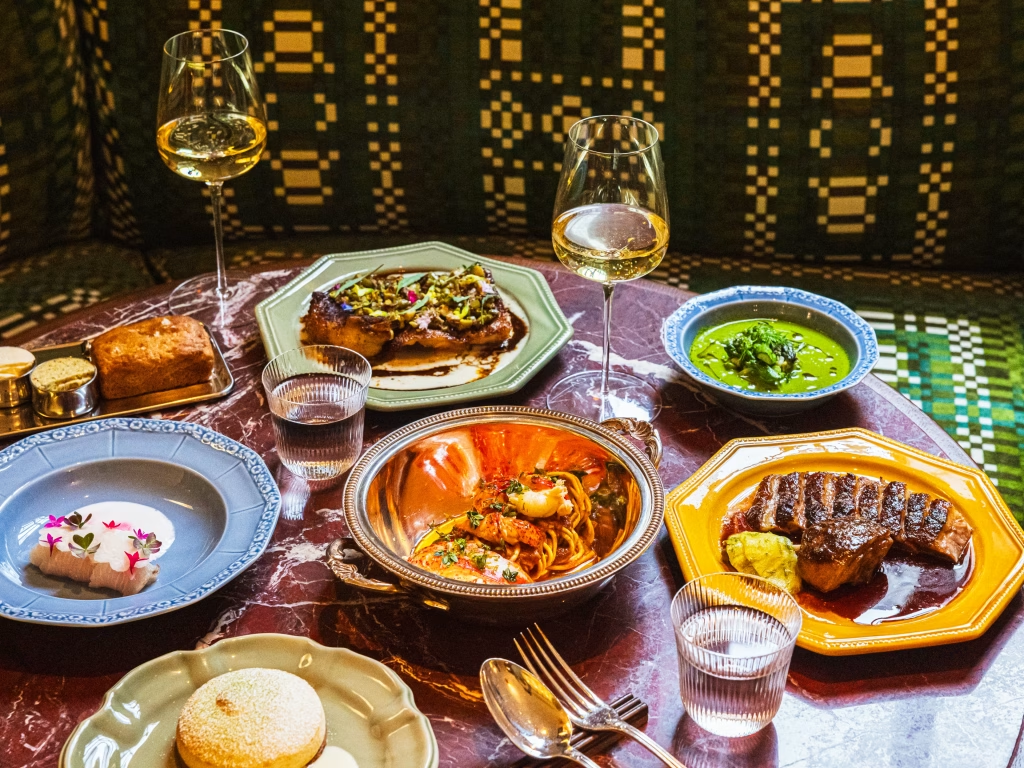

Inside Printemps at One Wall Street, Gregory Gourdet’s Maison Passerelle turns French technique, Caribbean memory, and downtown glamour into one of New York’s most polished new rooms.
Opening Scene
The chicken arrived with the confidence of a dish that knew it belonged in a beautiful room.
Roasted farm chicken can be a trap in fine dining. It is often the safest order, the dish chosen by people who want comfort but not risk, polish but not challenge. At Maison Passerelle, it was the opposite. Preserved lemon, green olive, soubise, ras el hanout, and harissa jus turned the plate into something warmer, deeper, and more worldly than the phrase “roasted chicken” usually allows. It was elegant, yes, but it had memory in it. It tasted less like a concession to the cautious diner than a chef reminding the room that restraint and flavor do not have to be enemies.
I went alone on April 12 for a solo birthday dinner, which is one of the truest tests of hospitality. A restaurant can charm a party. It can perform for a couple. But the solo diner sees the machinery more clearly: the greeting, the pacing, the pauses, the staff’s ability to make one person feel neither rushed nor stranded.
Maison Passerelle passed that test with grace.
What I Ordered
The meal was focused but complete:
Food
- Roasted baby beets
- Roasted farm chicken with preserved lemon, green olive, soubise, ras el hanout, and harissa jus
- Diri ak Sos Pwa — jasmine rice with Haitian kidney bean sauce
- Strawberry–rhubarb petit gâteau with cardamom, meringue, and cornmeal sponge

Drink
- Muri Passing Clouds — fermented gooseberries, jasmine tea, white currant wine
Best Dish
- Roasted farm chicken

Biggest Disappointment
- None
The ordering revealed the restaurant’s thesis clearly: French structure, diaspora flavor, and a dining room confident enough to let those worlds meet without overexplaining the encounter.
The Room
Maison Passerelle is sexy, but not in the cheap, nightlife sense of the word. It is sexy because it understands composition. The room has sheen, intelligence, and a sense of occasion. It feels like someone thought about what dinner should do to your posture.
The view of the kitchen is one of the room’s strongest assets. Open kitchens can sometimes feel theatrical in the wrong way — too exposed, too performative, too eager to prove labor. Here, the kitchen view adds electricity. It lets the diner see concentration, movement, hands, timing. For a solo birthday dinner, that matters. It gives the eye somewhere to travel. It turns the meal into something observed as much as consumed.
The room also has a rare downtown quality: it feels luxurious without becoming cold. Financial District restaurants often struggle with identity. Too many feel designed for expense accounts, tourists, or residents who want convenience dressed as taste. Maison Passerelle feels more ambitious. It wants to make downtown feel like a destination again.

The Food
The roasted baby beets began the meal with color and restraint. Beets have become a predictable fine-dining ingredient because they offer earthiness, sweetness, and visual drama. The risk is boredom. Too often, beet dishes arrive looking composed but tasting static. Here, the dish worked as an opening movement: clean, grounded, and not overburdened. It prepared the palate rather than trying to dominate the table.
But the roasted farm chicken was the argument.
The preserved lemon gave brightness. The green olive brought salinity and depth. The soubise softened the plate with quiet sweetness. Ras el hanout added aromatic warmth, while the harissa jus gave the dish a final pulse of heat and intensity. What made it memorable was balance. None of the components felt decorative. Each had a job.
The chicken itself needed to be judged by texture and temperature, because no amount of sauce can rescue a poorly roasted bird. It delivered. The pleasure came from the way the dish moved between comfort and complexity. It had the emotional satisfaction of a classic roast chicken, but the flavor architecture was broader, warmer, and more culturally layered.
This was the dish of the night because it understood what Maison Passerelle is trying to do. It did not merely borrow from different traditions. It created a plate where those influences felt natural together.
The Diri ak Sos Pwa may have been the most culturally revealing dish on the table. Jasmine rice with Haitian kidney bean sauce is not background food. It is home food, memory food, food with a center of gravity. In a fine-dining room inside a luxury French department store, the dish becomes more than a side. It becomes a statement about what kinds of food are allowed to be treated with elegance.
That matters.
New York fine dining has often elevated European comfort while leaving Caribbean comfort outside the frame of prestige. Maison Passerelle challenges that hierarchy. The rice and bean sauce did not need to be disguised. It belonged exactly where it was.
Dessert, the strawberry–rhubarb petit gâteau with cardamom, meringue, and cornmeal sponge, closed the meal with charm rather than weight. Strawberry and rhubarb can easily become nostalgic in a familiar pastry-shop way, but the cardamom shifted the register. The cornmeal sponge added texture and a subtle rusticity, keeping the dessert from feeling too polished for its own good. It was a thoughtful ending: bright, architectural, and not overly sweet.
The Drink
The Muri Passing Clouds was one of those nontraditional drinks that makes a meal feel more considered. Fermented gooseberries, jasmine tea, and white currant wine created a profile that was aromatic, gently acidic, and quietly sophisticated.
It did not perform like a standard cocktail. It behaved more like a bridge between wine, tea, and fermentation. That made sense in this room. Maison Passerelle is already built around bridges — between France and the Caribbean, between luxury retail and destination dining, between technique and memory. The drink echoed that idea without becoming too precious.
With the chicken, it offered lift. With the beets, it found earth and fruit. With dessert, it did not clash. That flexibility gave it value beyond novelty.
Hospitality
The maître d’ and server were amazing, and that is not a throwaway compliment in this setting. Service at Maison Passerelle has to manage several pressures at once: the expectations of fine dining, the curiosity around a major chef, the glamour of Printemps, the complexity of the menu, and the emotional vulnerability of occasions like a solo birthday dinner.
The staff brought knowledge without arrogance. That distinction is crucial. In ambitious restaurants, menu knowledge can sometimes harden into performance, with servers reciting ingredients as if auditioning for authority. Here, the hospitality felt more generous. The staff made the experience feel guided, not lectured.
For a solo diner, the rhythm was especially important. Good solo service requires intuition. Too much attention can feel invasive; too little can feel dismissive. Maison Passerelle found the middle. The meal felt cared for.
That may be the highest compliment for a birthday dinner alone: the room never made solitude feel like absence.
The Room Report
Maison Passerelle feels like a restaurant for people who want downtown to have glamour again.
The crowd reads polished, curious, and design-aware. This is not the rushed lunch energy of old Wall Street, nor the predictable stiffness of a Financial District steakhouse. It is more cosmopolitan: diners who know Gregory Gourdet, fashion-adjacent guests wandering through the Printemps universe, downtown residents, food people, and occasion diners who want something more interesting than another safe luxury room.
The social signal is refinement with cultural literacy. This is a place where the room says: I care about design, I care about food, and I want my special occasion to feel like it belongs to the current New York, not the old one.
The open kitchen also changes the social dynamic. It gives the dining room a pulse. Instead of feeling sealed off in a luxury box, guests are reminded that dinner is being made in real time, by real people, with focus and movement. That view humanizes the glamour.
Competitive Context
Maison Passerelle enters a crowded category: ambitious, design-forward, globally influenced New York dining. Its obvious comparison points are not just French restaurants, but restaurants like Tatiana, Le Rock, The Fulton, Saga, and other rooms that understand dining as culture, not simply cuisine.
Where Maison Passerelle distinguishes itself is in its particular bridge between French technique and Caribbean, African, and diasporic influence. It is not trying to be a classic French restaurant. That would be less interesting. New York already has enough restaurants fluent in butter, Burgundy, and nostalgia. Maison Passerelle is asking a more current question: what does French dining look like after empire, migration, memory, and New York have all had their say?
That question gives the restaurant intellectual weight.
It also gives the food emotional range. The chicken can be elegant and soulful. The rice and bean sauce can be humble and prestigious. The dessert can be refined and still carry the comfort of cornmeal. This is where Maison Passerelle separates itself from restaurants that use global influence as decoration. Here, the influences feel structural.
Cultural Meaning
Maison Passerelle is important because it sits at the intersection of several New York stories.
First, it is part of the Financial District’s transformation. Downtown is no longer only a place of offices, suits, and after-work drinks. It is becoming more residential, more luxury-coded, more culinary, and more image-conscious. A restaurant inside Printemps at One Wall Street is not just feeding diners; it is participating in a broader attempt to make FiDi feel desirable after dark.
Second, the restaurant represents a shift in what fine dining can canonize. Haitian rice and bean sauce appearing in this context is not incidental. It suggests that the emotional foods of the Caribbean diaspora can occupy the same level of care and prestige historically reserved for European classics.
Third, Maison Passerelle reflects a new form of luxury. The old luxury was exclusion. The new luxury is fluency: knowing how to move between cultures, ingredients, references, and rooms without flattening them. This restaurant understands that the modern sophisticated diner does not only want truffles and caviar. They want meaning.
On my birthday, dining alone, that meaning felt personal. A beautiful room, an excellent chicken, a staff that knew what it was doing, and a plate of rice and beans treated with seriousness — that is not merely dinner. That is a kind of recognition.
The Check
The exact total was not recorded, but the experience was definitely worth the money.
Maison Passerelle is not casual spending. It is special-occasion spending. The question is whether the restaurant delivers enough room, food, service, and memory to justify that occasion. On this visit, it did.
The value is strongest for diners who want more than a meal. If you only want calories, there are cheaper options. If you want a room with atmosphere, a kitchen with a point of view, and service that can carry an important night, Maison Passerelle earns its price.
Would I return? Yes — and next time, I would come with friends and order family style. That may be the better way to understand the restaurant’s full range. But the solo birthday dinner proved something equally important: Maison Passerelle can hold one diner’s attention from start to finish.
Who Should Come
Come for a birthday dinner, especially if you want the evening to feel adult, stylish, and a little cinematic. Come for a date if the goal is not just romance, but taste. Come with friends who enjoy ordering widely and talking about the food. Come with clients if they are culturally curious and not simply looking for steakhouse familiarity.
Solo diners should come, too. The room has enough movement to keep you engaged, and the staff has enough grace to make the experience feel intentional rather than awkward.
Do not come expecting old French formality. Maison Passerelle is not trying to preserve French dining in amber. It is trying to move it somewhere else.
Final Judgment
Maison Passerelle is a Verveon Pick.
The roasted farm chicken is the essential order: preserved lemon, green olive, soubise, ras el hanout, and harissa jus coming together in a dish that feels both composed and alive. The Diri ak Sos Pwa gives the restaurant cultural depth. The strawberry–rhubarb petit gâteau closes with intelligence. The Muri Passing Clouds proves the beverage program understands subtlety.
The room is sexy. The kitchen view is excellent. The staff is deeply knowledgeable. The service has polish without stiffness. Most importantly, the restaurant feels like it has a reason to exist.
Maison Passerelle is not just another expensive New York opening with good lighting. It is a restaurant with a thesis: that French dining, filtered through Caribbean memory, African influence, Asian touchpoints, and downtown New York glamour, can feel newly alive.
On a solo birthday night, it did exactly what a great restaurant should do.
It made one person at the table feel like the whole room had opened.

